e20-4yp-Automated-Code-Smell-Detection-and-Refactoring-with-LLMs
Team
- E/20/062, K.S. Dhananji, email
- E/20/367, Binuri Senavirathna, email
- E/20/350, J.P.D.N. Sandamali, email
Supervisors
- Mr. Biswajith Dissanayake — Lecturer (Prob)
- Mr. Thilina Gunarathne — Lecturer (Prob)
Table of Contents
- Introduction
- Research Problem
- Objectives
- Proposed Solution
- System Architecture
- Methodology
- Results
- Impact & Limitations
- Future Work
- Getting Started
- Links
Introduction
Modern software systems continue to grow rapidly in size and complexity. As projects evolve, maintaining clean and maintainable code becomes increasingly difficult. Poor coding practices often introduce code smells, which indicate deeper structural and maintainability issues within software systems.
SmellSense AI is a research-based intelligent system designed to automatically detect, explain, prioritize, and refactor code smells using a hybrid combination of static analysis, software metrics, and Large Language Models (LLMs).
The system provides an end-to-end workflow that assists developers in improving software quality and maintainability through intelligent automated refactoring.
Research Problem
Manual code smell detection is time-consuming, inconsistent, and difficult to scale across large software systems.
Traditional static analysis tools:
- Depend heavily on rule-based detection
- Lack contextual explanations
- Do not provide severity analysis
- Usually stop at detection without automated refactoring support
Standalone LLM-based approaches also introduce challenges such as:
- Inconsistent outputs
- Invalid or unverified refactoring
- Lack of structured prioritization
SmellSense AI addresses these limitations through a hybrid intelligent pipeline.
Objectives
The primary objectives of the project are:
- Detect code smells using multiple detection engines
- Explain detected smells and assess severity
- Automatically generate safe refactoring solutions
- Provide a complete end-to-end workflow for developers
Proposed Solution
SmellSense AI introduces a fully integrated LLM-powered pipeline that:
- Detects multiple code smells
- Generates explanations and severity rankings
- Prioritizes smells based on impact
- Produces automated refactoring suggestions
- Validates generated outputs
- Provides chatbot-based interaction for developers
System Architecture
The system consists of multiple integrated components working together to provide intelligent code analysis and refactoring support.
Main Components
- Frontend chatbot interface
- Backend API server
- Feature extraction engine
- Static analysis engine
- Metric analysis engine
- LLM semantic analysis engine
- Refactoring and validation engine
Methodology
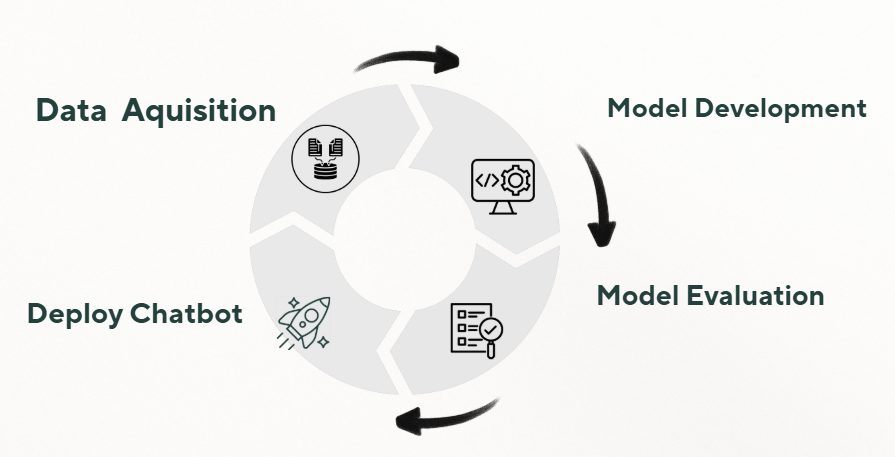
The methodology consists of several major stages.
Data Acquisition
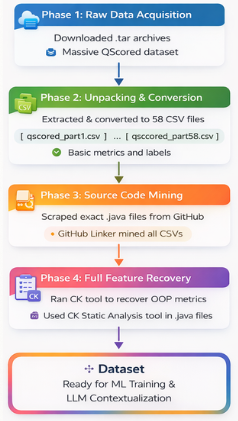
The dataset preparation process includes:
- Downloading datasets
- Cleaning and extracting source code
- Mining Java projects from GitHub
- Recovering software metrics
- Preparing datasets for ML training
Code Smell Detection
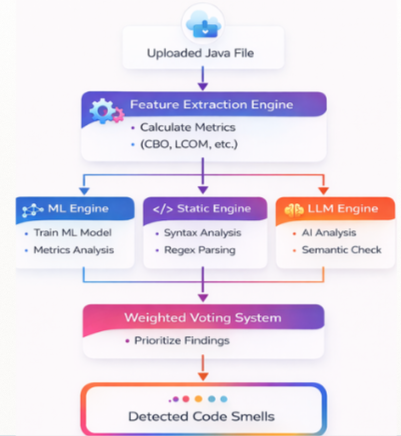
The detection process includes:
- Feature extraction
- Static analysis
- Regex parsing
- Metrics analysis
- AI semantic analysis
Smell Explanation & Prioritization
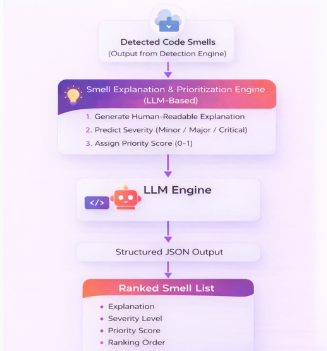
The prioritization engine:
- Generates human-readable explanations
- Predicts severity levels
- Assigns priority scores
- Produces ranked smell lists
Automated Refactoring
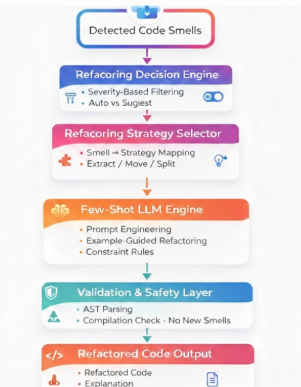
The refactoring process includes:
- Refactoring decision engine
- Smell-to-strategy mapping
- Prompt engineering
- Validation and repair mechanisms
Model Evaluation
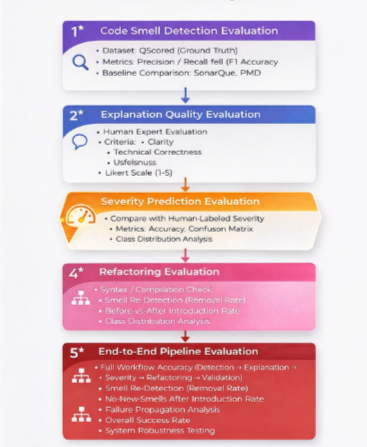
Evaluation measures:
- Detection accuracy
- Refactoring correctness
- Runtime performance
- Workflow efficiency
Chatbot Development
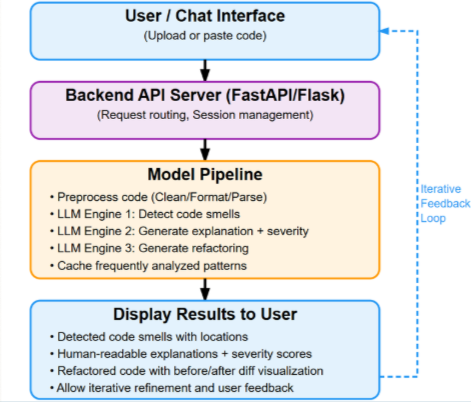
The chatbot interface enables users to:
- Upload or paste code
- View detected smells
- Read explanations
- Access refactoring suggestions
Results
The proposed system demonstrates improvements over traditional tools and standalone LLM approaches.
Chatbot Interface Results
The chatbot interface acts as the primary interaction layer between the user and the backend analysis pipeline.
The workflow includes:
- User uploads or pastes source code
- Detection engines analyze the code
- Detected smells are consolidated
- Priority rankings are generated
- Refactoring suggestions are produced
- Results are displayed to the user
Initial Detection Results
The following interface demonstrates the initial analysis results generated after code submission.
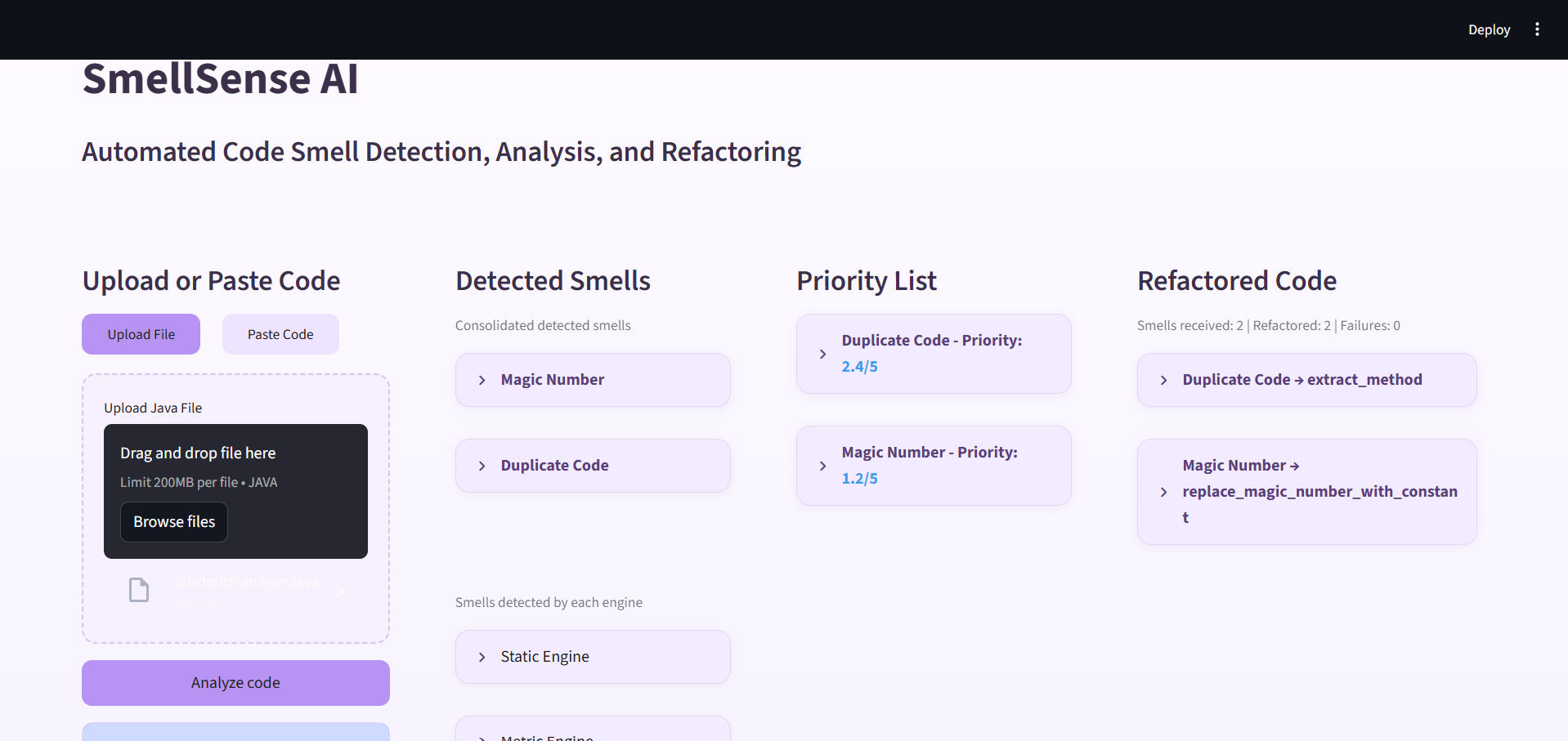
This interface displays:
- Uploaded source code input section
- Consolidated detected smells
- Severity-based priority rankings
- Initial refactoring recommendations
Detailed Analysis and Refactoring Results
The following interface demonstrates detailed chatbot outputs after selecting detected smells and generated refactoring suggestions.
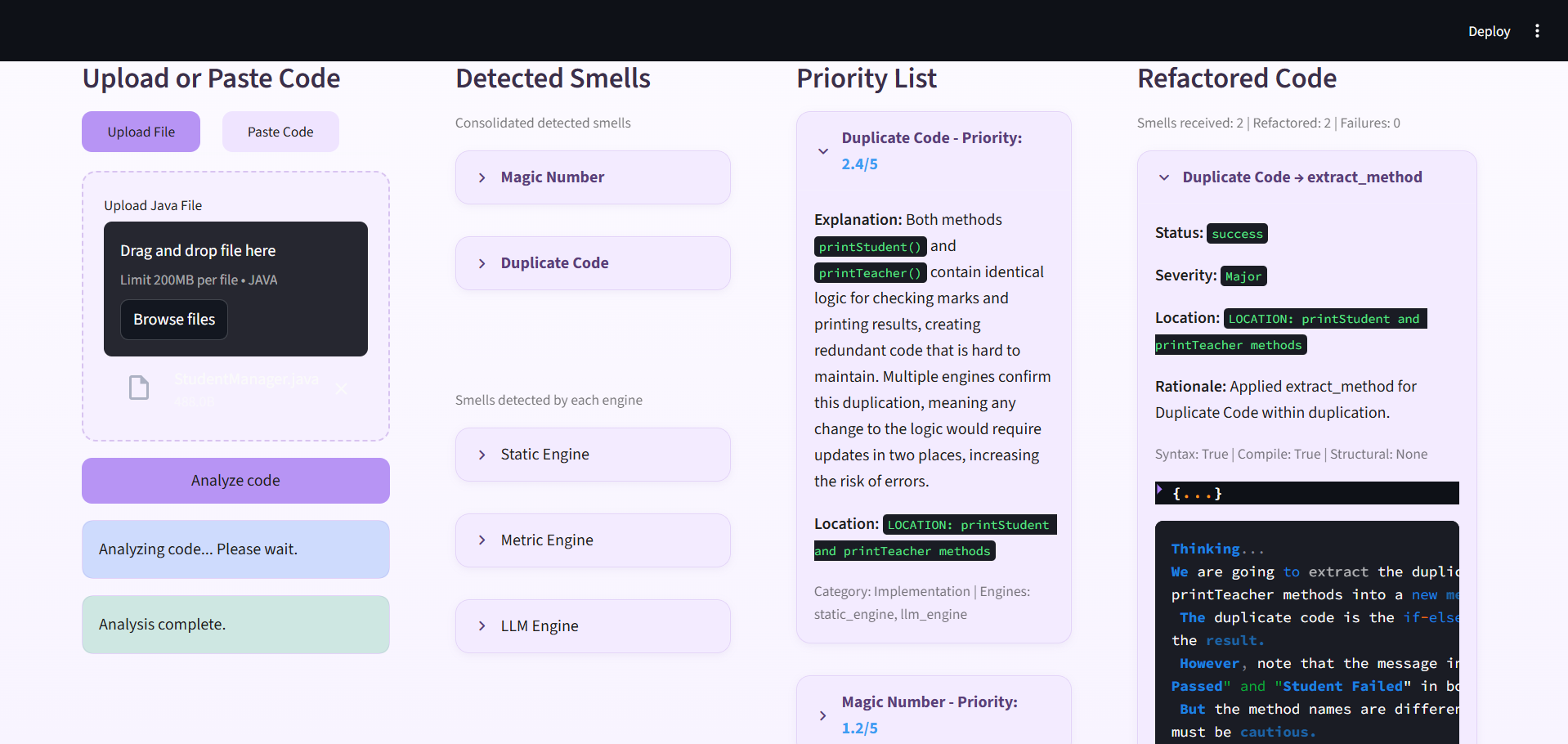
This interface displays:
- Detailed smell explanations
- Severity information
- Affected code locations
- Refactoring rationale
- Validation results
- Generated refactored code
Key Improvements
- Better detection coverage
- Structured explanations
- Smell-aware refactoring
- Improved output reliability
- End-to-end workflow integration
Impact & Limitations
Impact
- Improves software maintainability
- Enhances developer productivity
- Combines static analysis with AI techniques
- Provides a modular research framework
Limitations
- Validation mainly focuses on syntax and compilation
- Dependent on local LLM performance
- Structural smells remain challenging
Future Work
Future improvements include:
- IDE plugin integration
- Support for additional programming languages
Getting Started
Prerequisites
- Python 3.10+
- Java Runtime Environment
- Ollama running locally
Run Backend
python -m backend.app.main
```

Backend API:

````text
http://localhost:8501
Run Frontend
streamlit run frontend/ui/chatbot_ui.py
Frontend UI:
http://localhost:8501