From Light Degradation to Actionable Prediction
This implemented end-to-end platform uses simulator streams, MQTT data pipelines, and FastAPI intelligence services to produce interpretable 3-day, 7-day, and 14-day failure probabilities for proactive luminaire maintenance planning.

The Operational Gap: Reactive to Probability-Driven.
System Latency
Legacy monitoring architectures fail at the intersection of environmental volatility and sensor degradation. Without predictive awareness, late detection becomes the operational norm, resulting in cascading failures across the electrical grid.
-
close
Late Detection Fault identification typically occurs >200ms post-event threshold.
-
close
No Probability Awareness Static thresholds ignore the cumulative probability of environmental stressors.
-
close
Gradual vs Sudden Blindness Threshold-only logic cannot reliably separate slow lumen degradation from abrupt electrical anomalies.
-
close
Weak Context Awareness Temperature, humidity, and lifecycle effects are often ignored until fault conditions become severe.
Photometric
LDR / Brightness
Electrical
Ripple % / Load
Environmental
Ambient Kinetics
Optical + Lifecycle
RGB Quality / Operating Hours
Architecture & Node Logic
A mission-critical 4-layer framework designed for Industry 5.0 compliance, integrating real-time telemetry with predictive cloud intelligence.
Application Layer
User-centric visualization and executive-level analytical reporting interfaces.
Cloud Intelligence
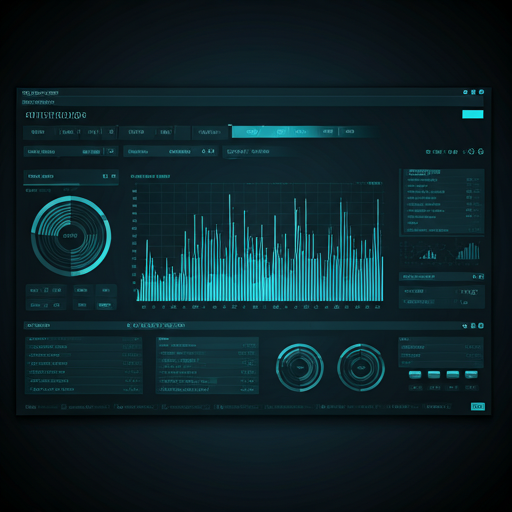
Scalable data processing pipelines and predictive forecasting through advanced machine learning.

Connectivity Hub
Low-latency message queuing and logic routing for resilient edge-to-cloud communication.

Edge Sensors
Direct physical hardware interaction and pre-processing of raw environmental data.
Augmenting worker capability through real-time feedback loops and intuitive visual cues.
Optimizing power consumption across the edge-node network for minimal carbon footprint.
Fault-tolerant architecture ensuring system stability even during partial network latency.
System Documentation
Built With
Architecture Hash
SHA-256: 48e9c9c400221b00080f11004f58dce4e5695700ffecac006875001f24
Interactive Luminaire Sensor Simulator
Standalone what-if simulator: adjust RGB shift, ambient temperature, light intensity, and ripple shift to study how sensor patterns and stress indicators evolve visually.
Simulator Controls
Simulator Stress Distribution
Derived from rgb shift, temperature, intensity, ripple
RGB Composite
LDR Proxy
Ripple %
Thermal Stress

Simulator Data Path Mapping
End-to-end horizontal data flow for synthetic luminaire telemetry.
Parallel LED Instances
Contributors
Supervisor: Prof. Kamalanath Samarakoon