
Chapter 01
Digitization
Replace subjective manual monitoring with measurable sensor data.
Replace instinct-only checks with a view of the living leaf bed.
Observe01
INDUSTRIAL IoT · TEA PROCESS INTELLIGENCE
Spectra Leaf aims to make black-tea oxidation measurable and repeatable by capturing temperature, gas and colour telemetry for live factory guidance and future quality-control models.
Spectra Leaf aims to digitize the most judgement-sensitive stage of black-tea production and help factories reproduce a better fermentation sweet spot from measured evidence.
Spectra Leaf is an Industrial IoT system that measures what happens across the tea bed, sends the signals to a secure cloud platform and turns them into live operational guidance.
Tea makers commonly call the post-rolling stage “fermentation”. Technically, the main transformation is enzymatic oxidation: rolling or CTC ruptures the leaf cells, oxygen reaches the compounds inside, and colour and aroma develop across the moist solid leaf bed.
This is the phase Spectra Leaf addresses. Temperature, volatile-gas response and colour are captured together so a factory officer can follow the batch without depending on isolated visual checks alone.
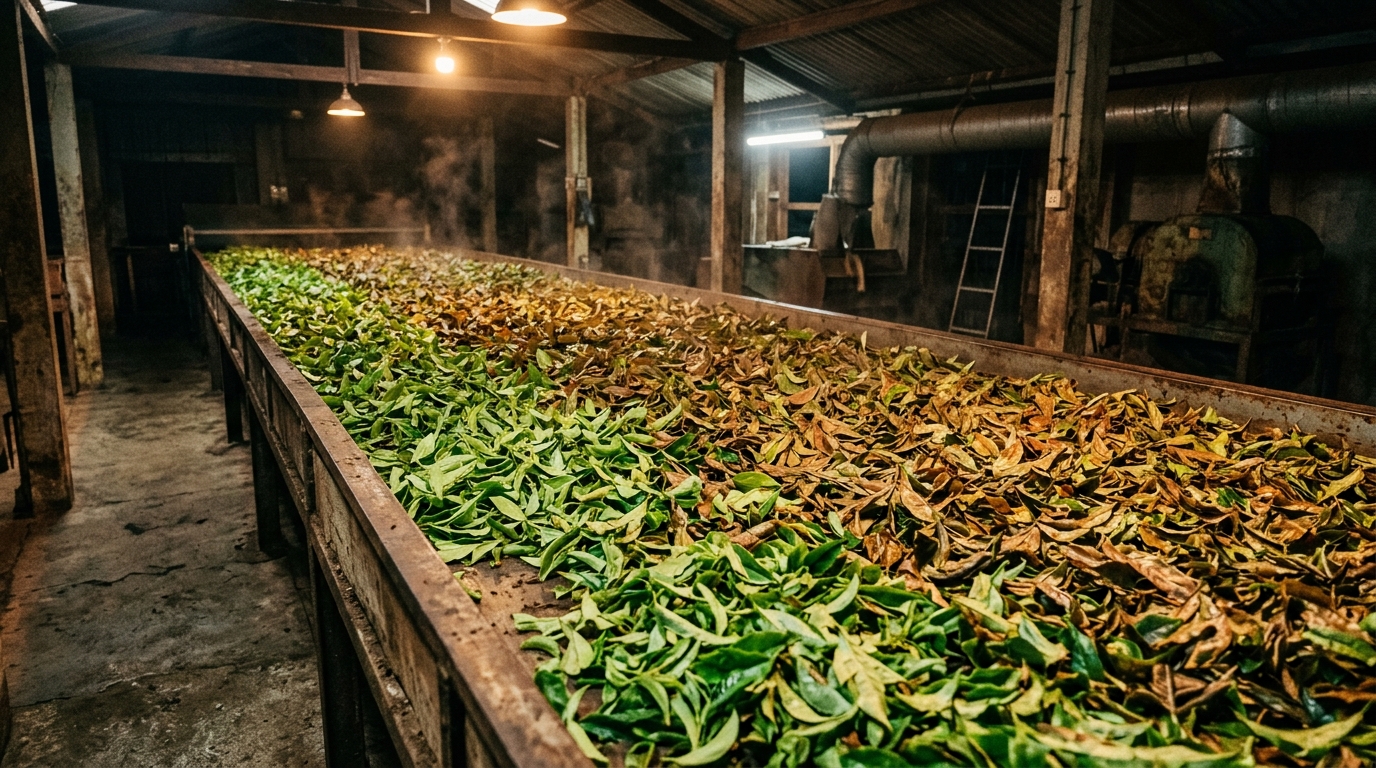
Leaves are spread as a solid bed while oxygen-driven reactions develop the expected coppery colour and characteristic aroma. Drying then arrests the reaction. Spectra Leaf concentrates its measurements and guidance inside this changing window.
The system automates data capture, cloud synchronization, batch history and live visualization. Expert quality evaluation remains part of the loop and supplies the labels needed for future prediction.
Sample temperature, gas and leaf colour at the same time.
Publish batch-linked readings securely through AWS IoT.
Show live progress and device state to the factory officer.
Pair each completed profile with its final Good Leaf Percentage.
Scroll through the three assembly stages, from the first sensor connection to the finished enclosure.
Mount the temperature, humidity, gas and vision sensors that observe the leaf bed.
Connect the pump system, relay interfaces and the project-specific controller board.
Bring sensing, flow control, enclosure and edge connectivity together as one operational unit.
Journey / 01—04
Four deliberate moves connect the factory floor to future intelligence—without removing expert judgement from the process.
Replace subjective manual monitoring with measurable sensor data.
Replace instinct-only checks with a view of the living leaf bed.
Give factory officers a responsive dashboard for monitoring active fermentation batches.
Give the shift team immediate context while the batch is active.
Build structured fermentation profiles mapped to final Good Leaf Percentage values.
Keep every signal attached to its batch and final quality result.
Prepare for machine-learning-based detection of the optimum fermentation endpoint.
Turn accumulated evidence into future endpoint intelligence.
The current prototype combines practical sensing, reliable telemetry and usable factory insight while preparing every batch for future intelligence.
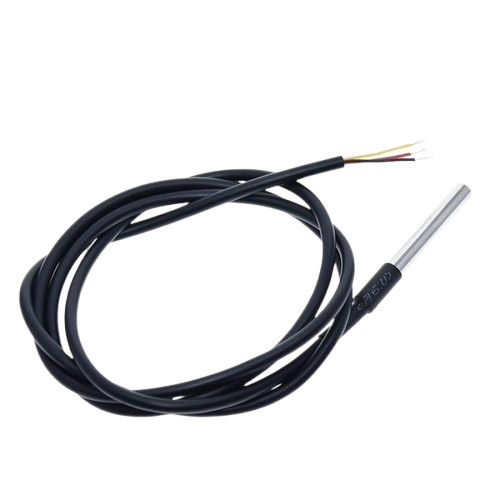
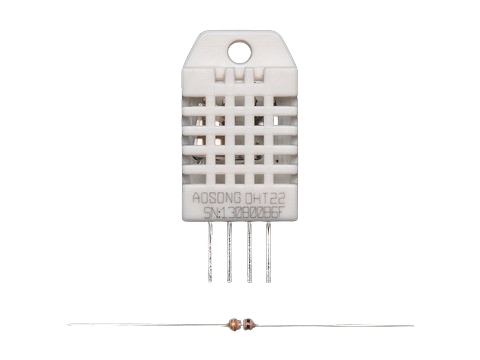
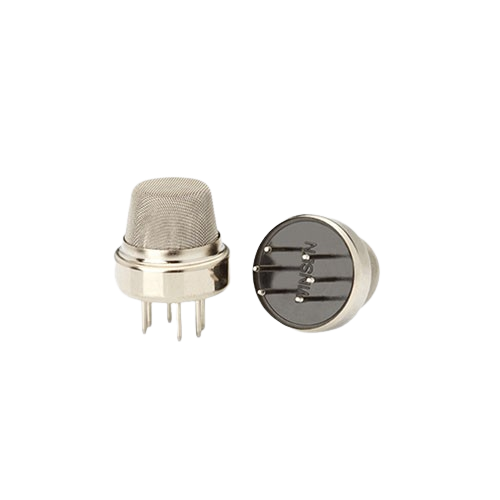
Temperature, humidity, vision and three gas-response channels capture one batch-linked view of the changing tea bed.
Starting or stopping fermentation updates the backend-owned process state seen by connected web and mobile clients.
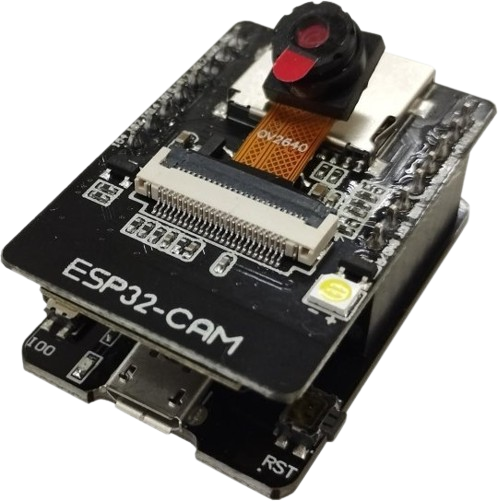
The ESP32-CAM coordinates sensing and visual context, reconnects after interruptions and resumes secure publishing.
AWS IoT Core, Lambda and DynamoDB move telemetry securely without fixed server infrastructure.
Cognito protects operational data while officers and managers receive interfaces matched to their responsibilities.
Completed sensor profiles can be paired with expert Good Leaf Percentage results for future model development.
Signal journey / 01—03
Follow a reading from the warm leaf bed, through a secure cloud state, to the people making the next decision.
The ESP32-CAM aligns every reading with the active device, batch and timestamp before secure transmission.
AWS services validate incoming data, retain batch history and maintain one shared fermentation state.
Authenticated web and mobile views translate the same backend state into role-appropriate controls and insight.
Temperature, humidity, imaging and three gas-response signals.
Synchronized capture, device identity and secure Wi-Fi publishing.
Telemetry transport and one shared RUNNING or STOPPED state.
Validation, protected operations and batch history.
Role-aware access to controls, trends and completed records.
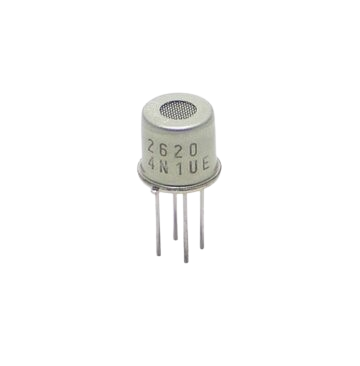
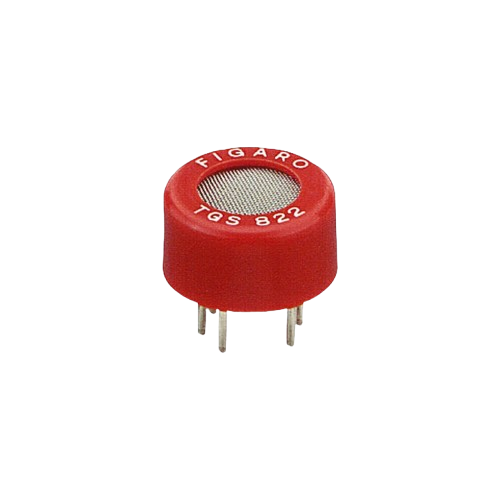
The device combines temperature, humidity, imaging and three complementary gas-response sensors around a central ESP32 controller.
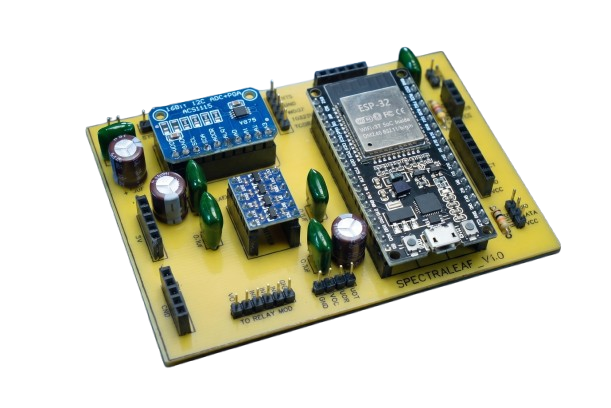 MAIN CONTROLLER / ESP32
The ESP32 is the device control hub. It reads the sensor channels, coordinates pump and relay actions, manages the local display and publishes batch-linked telemetry over secure Wi-Fi.
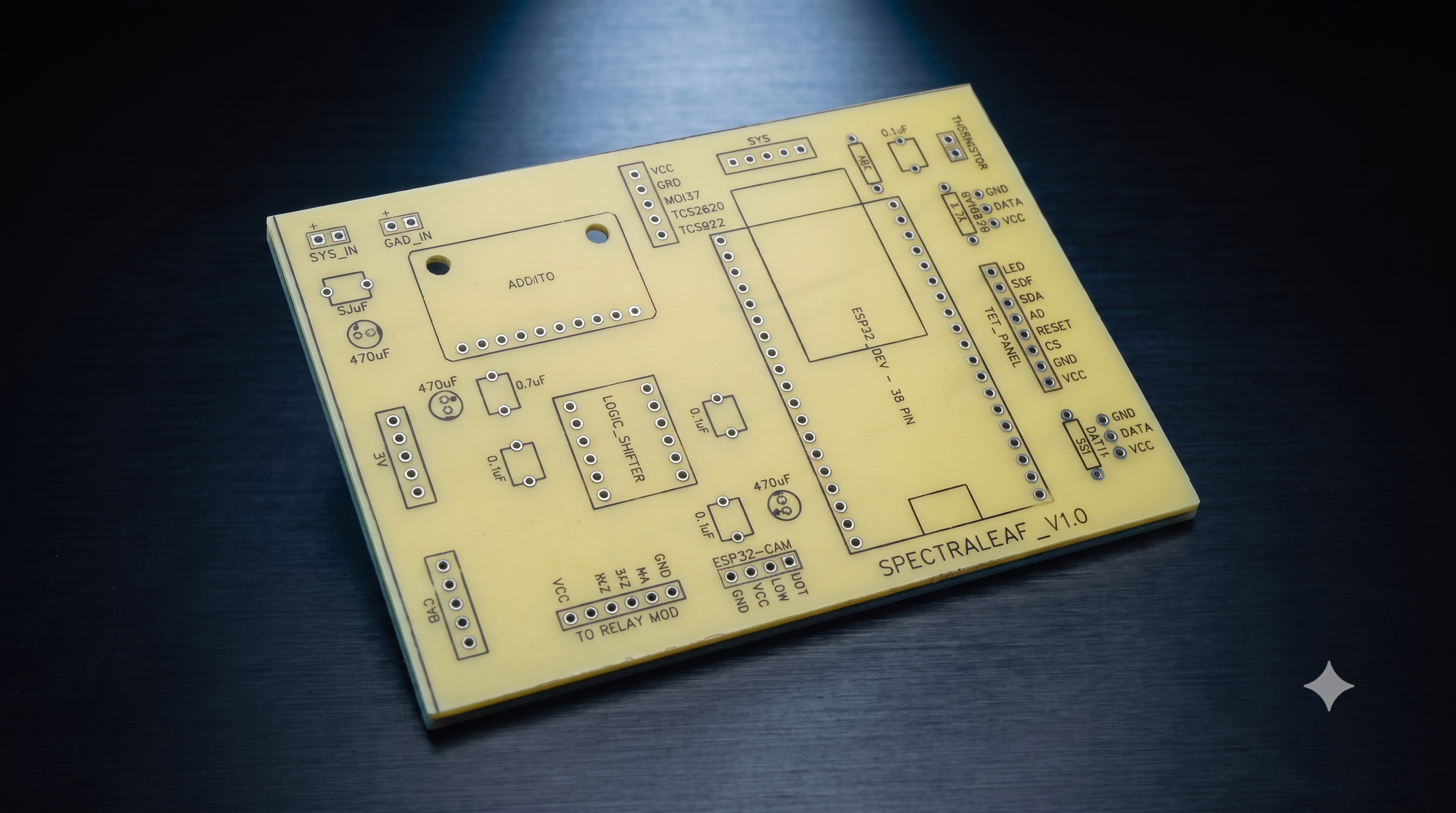
The Spectra Leaf V1.0 board consolidates ESP32-CAM control, temperature and humidity inputs, three conditioned gas channels, relay interfaces and regulated power on one project-specific PCB.
Connect securely to Wi-Fi
Connect to AWS IoT Core
Subscribe to Device Shadow
Read RUNNING / STOPPED state
Sample temperature and humidity
Read MQ137, TGS2620 and TGS822
Capture an ESP32-CAM frame when required
Attach device, batch and timestamp
Publish telemetry using MQTT
Update reported Shadow state
Reconnect after interruption
Continue the sensing loop
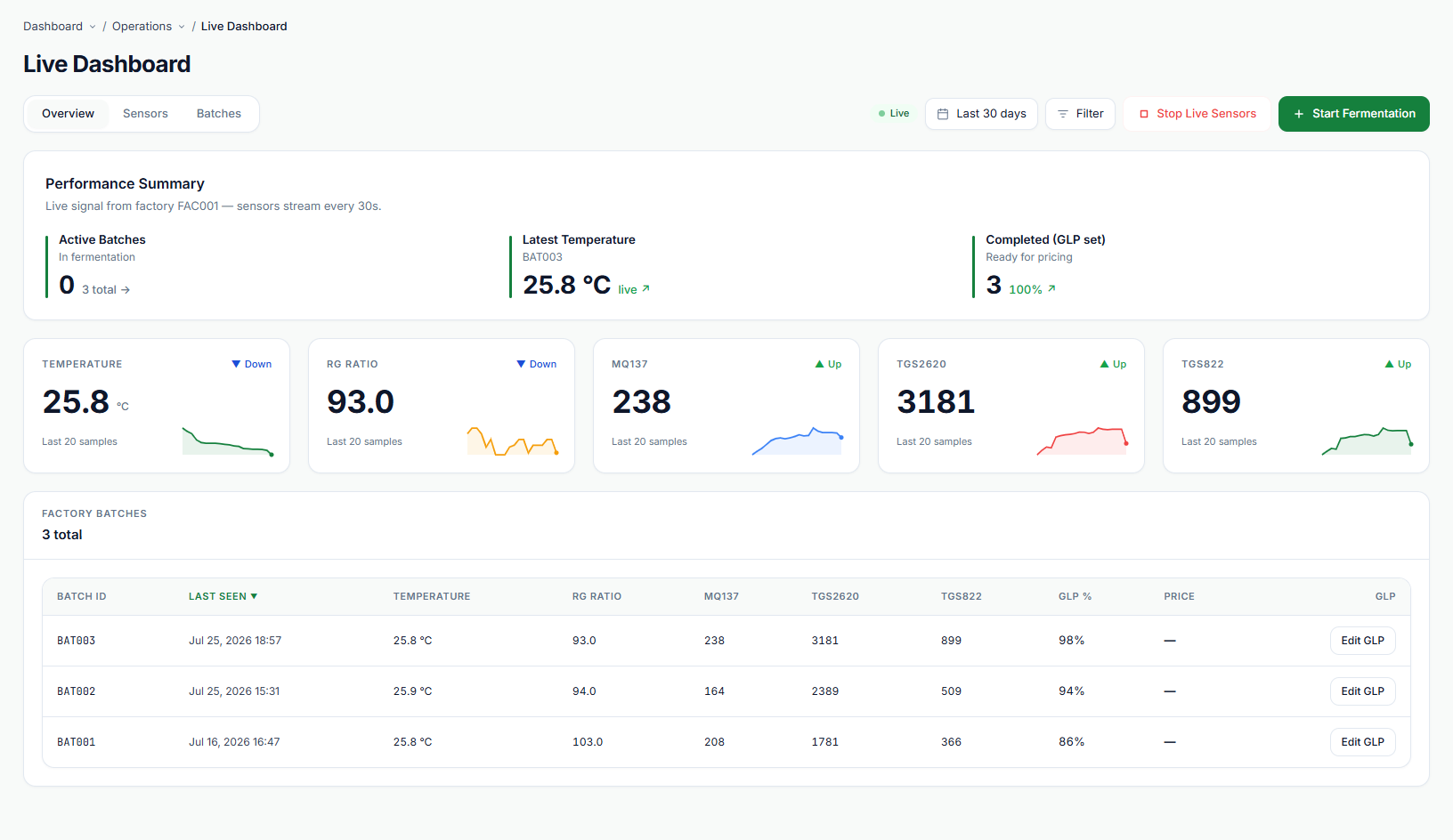
The architecture separates device messaging, shared process state, validation, storage, identity and presentation so each part can scale and recover independently.
Telemetry moves left to right. Start and stop commands return through the same authenticated path and are synchronized with the edge node through Device Shadow.
Secure MQTT gateway and device communication layer.
Synchronizes desired dashboard state with the ESP32 reported state.
Runs validation, processing and control logic without persistent servers.
Provides controlled REST endpoints for dashboard operations.
Stores batch records and timestamped sensor telemetry.
Authenticates users and issues tokens for role-aware access.
Connects the Next.js client to identity and cloud services.
The software stack turns synchronized telemetry into clear, role-appropriate actions while keeping identity and protected cloud access in one managed flow.
Frameworks, languages, cloud services and security components used across the platform.
Next.js and React power the responsive interface, while TypeScript and Tailwind CSS provide a consistent implementation and visual language. Amplify connects Cognito identity to protected cloud services and preserves session continuity through token refresh.
Active batches, device connectivity and fermentation progress remain visible across desktop, tablet and mobile.
Responsive operational interface
Managed user identity and sign-in
JWT attached to authorized APIs
Token refresh across active work
Desktop, tablet and mobile
Active work stays visually prominent
Cognito manages sign-in and session tokens. The client attaches a valid JSON Web Token to protected requests, where authorization rules can distinguish factory officers, factory managers and general managers.
Every batch creates a synchronized record that connects physical change, cloud data and expert-evaluated final quality.
Open datasets correlating detailed tea-oxidation sensor readings with final factory quality measurements are limited.
Spectra Leaf captures synchronized temperature, gas and colour readings, then links the completed profile to an expert-evaluated Good Leaf Percentage.
The prediction layer is the planned outcome of the dataset now being collected; it is not presented as a production model.
The officer starts a batch and the ESP32 samples temperature, gas response and colour together.
Readings are identified by device, batch and timestamp, then published securely through MQTT.
Cloud functions check the payload and persist the time-series profile in DynamoDB.
After grading, the expert-evaluated Good Leaf Percentage is linked to the completed batch.
Profiles are cleaned, aligned and organized into trustworthy model-ready examples.
Future models learn process-to-quality patterns and can return stage estimates or alerts.
Machine learning is planned future work. The current contribution is a reliable, batch-linked and expert-labelled dataset.
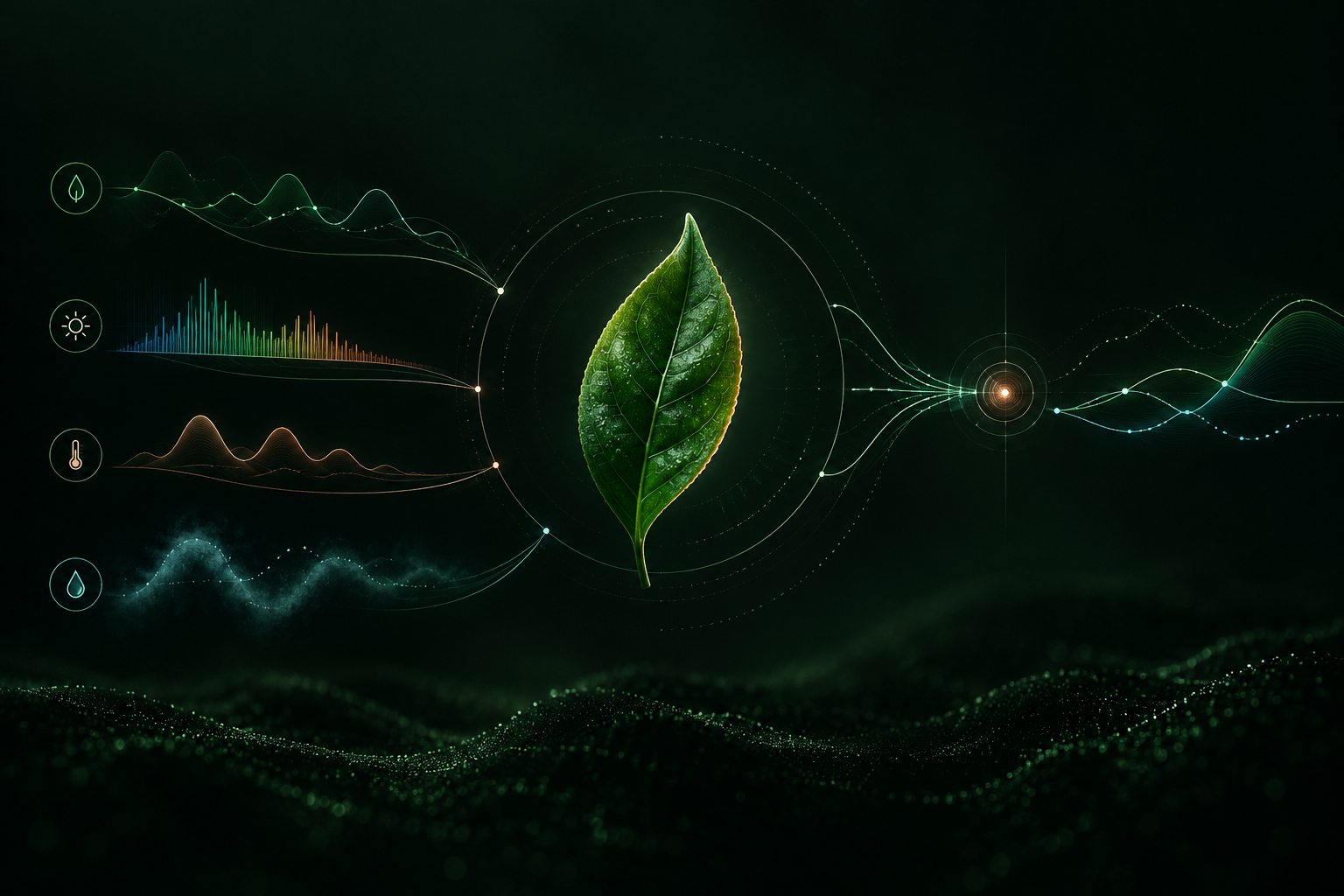
Three authenticated roles share one data platform while receiving the controls, detail and reporting appropriate to their responsibilities.
A live workspace for starting batches, following every sensor and recording the final GLP result.
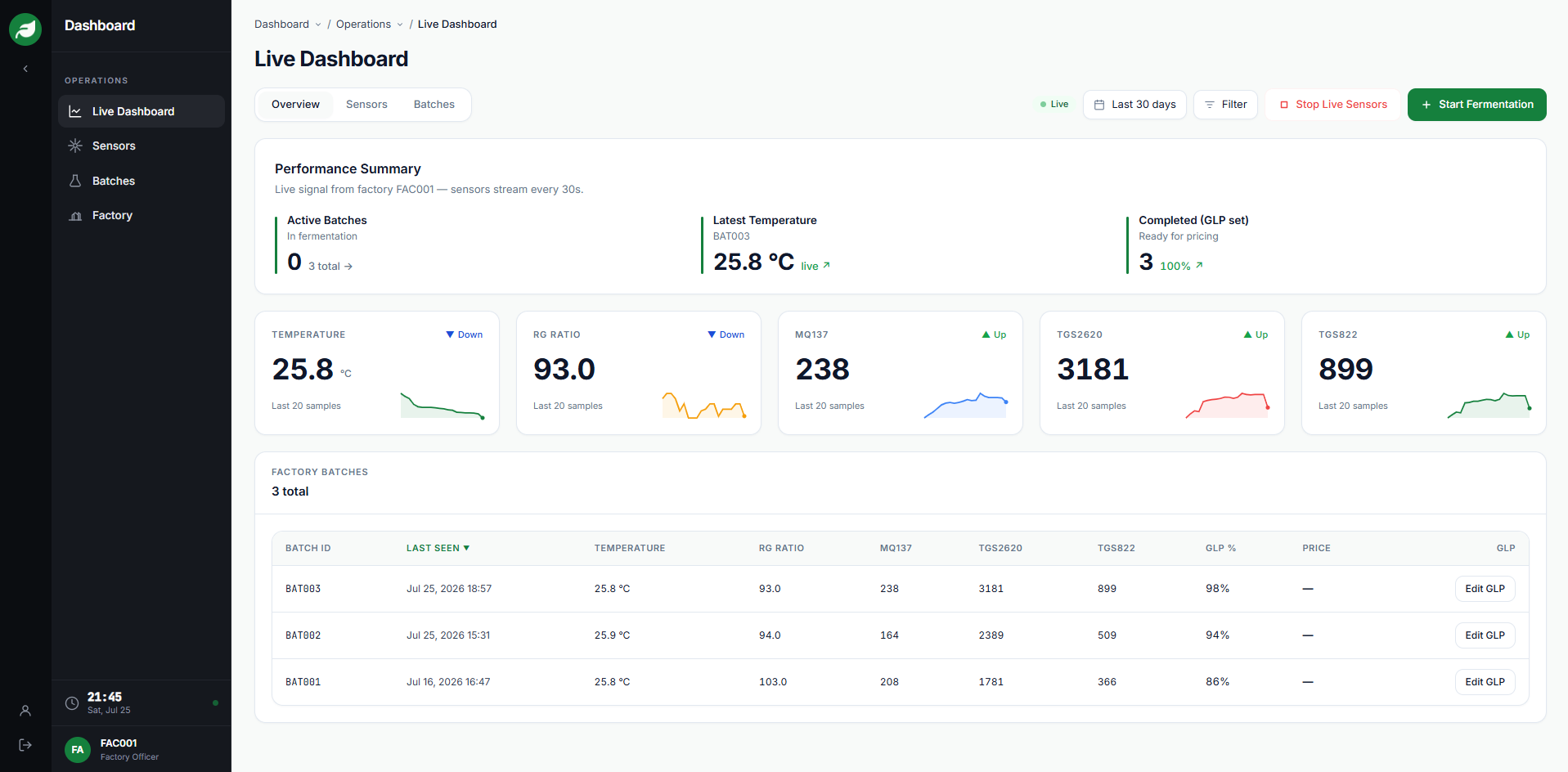
A management view for batch pricing, pending work, revenue tracking and factory-level analysis.
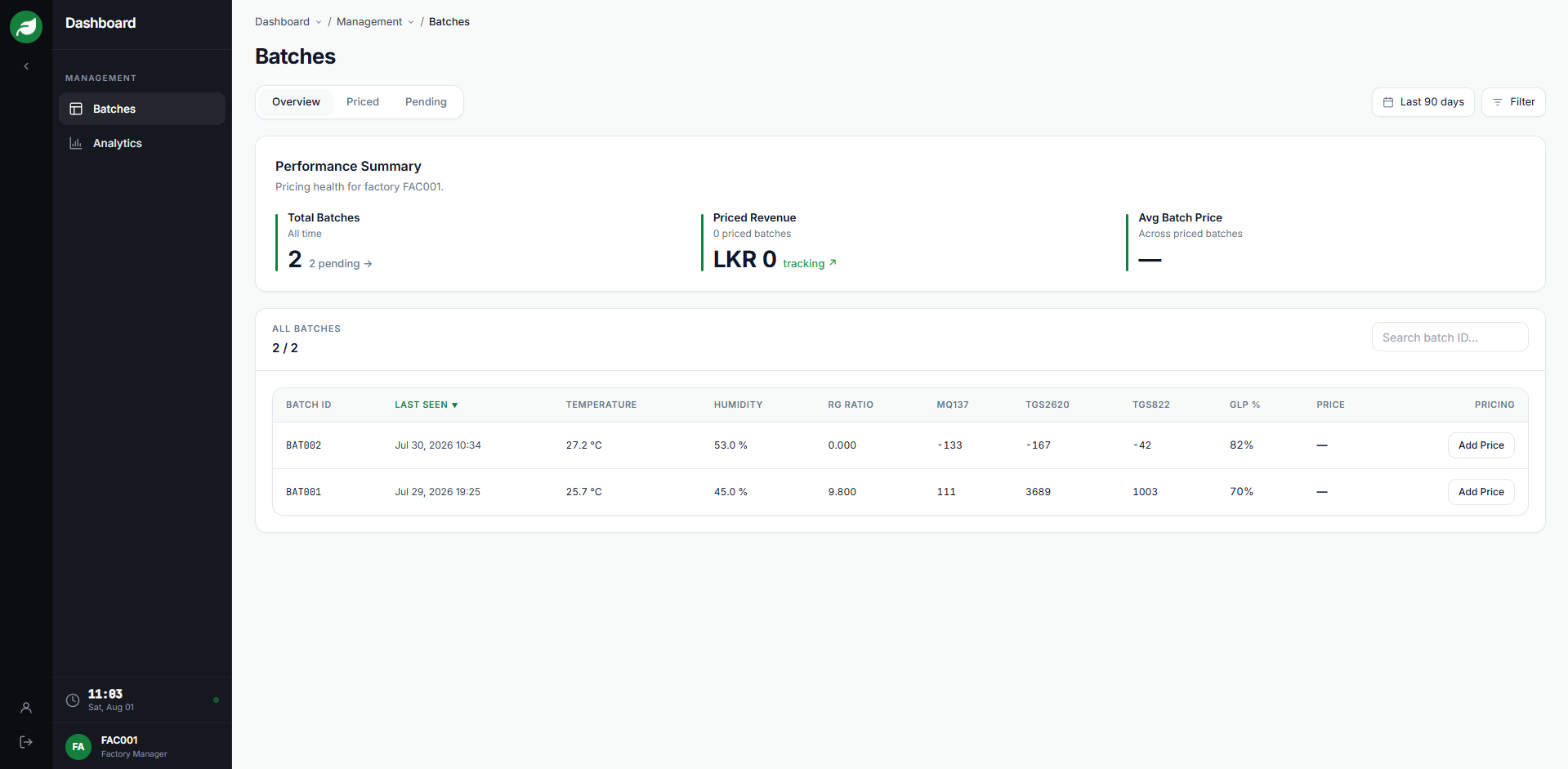
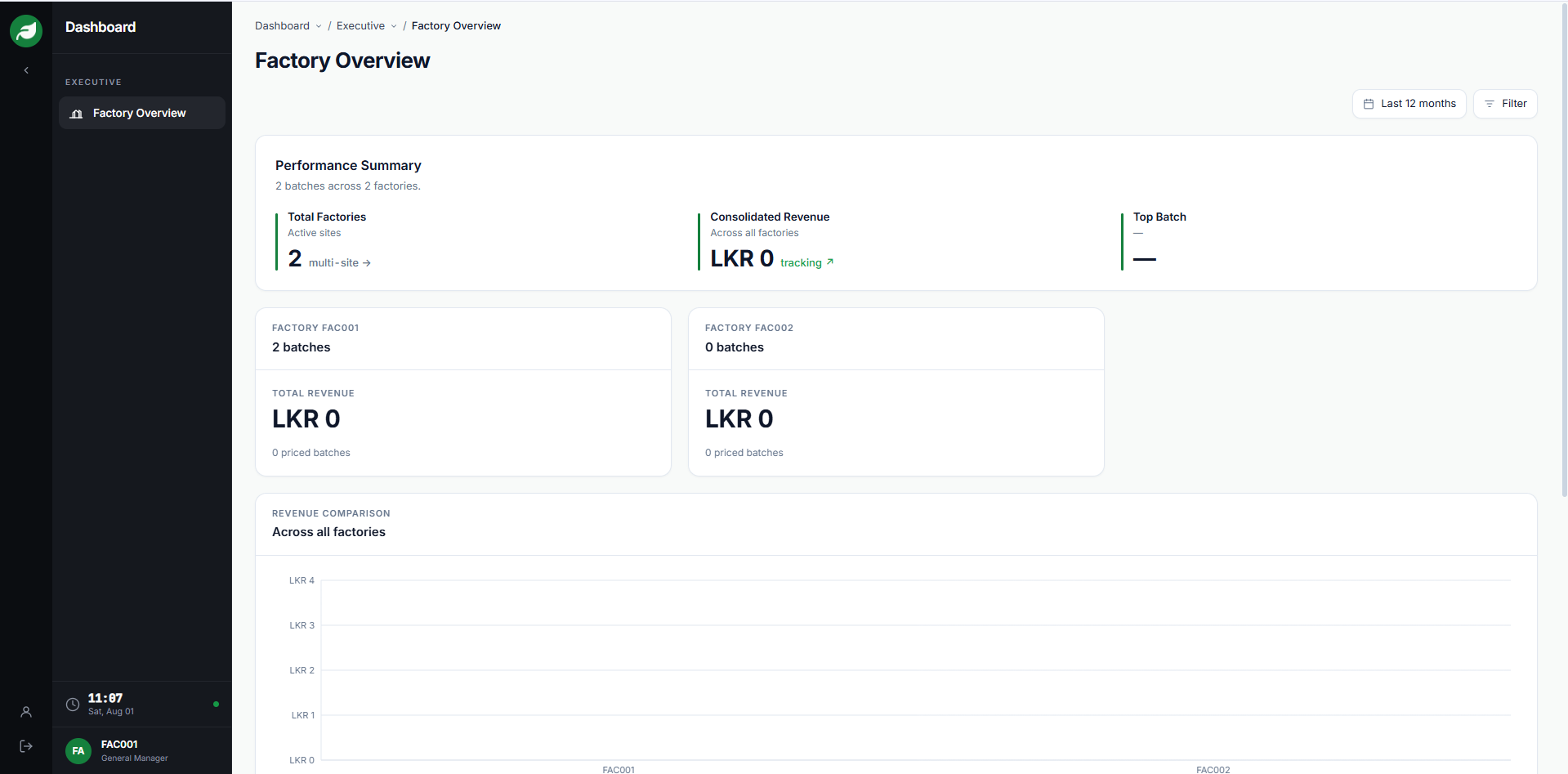
An executive view that brings factory status, consolidated revenue and organization-wide comparisons together.
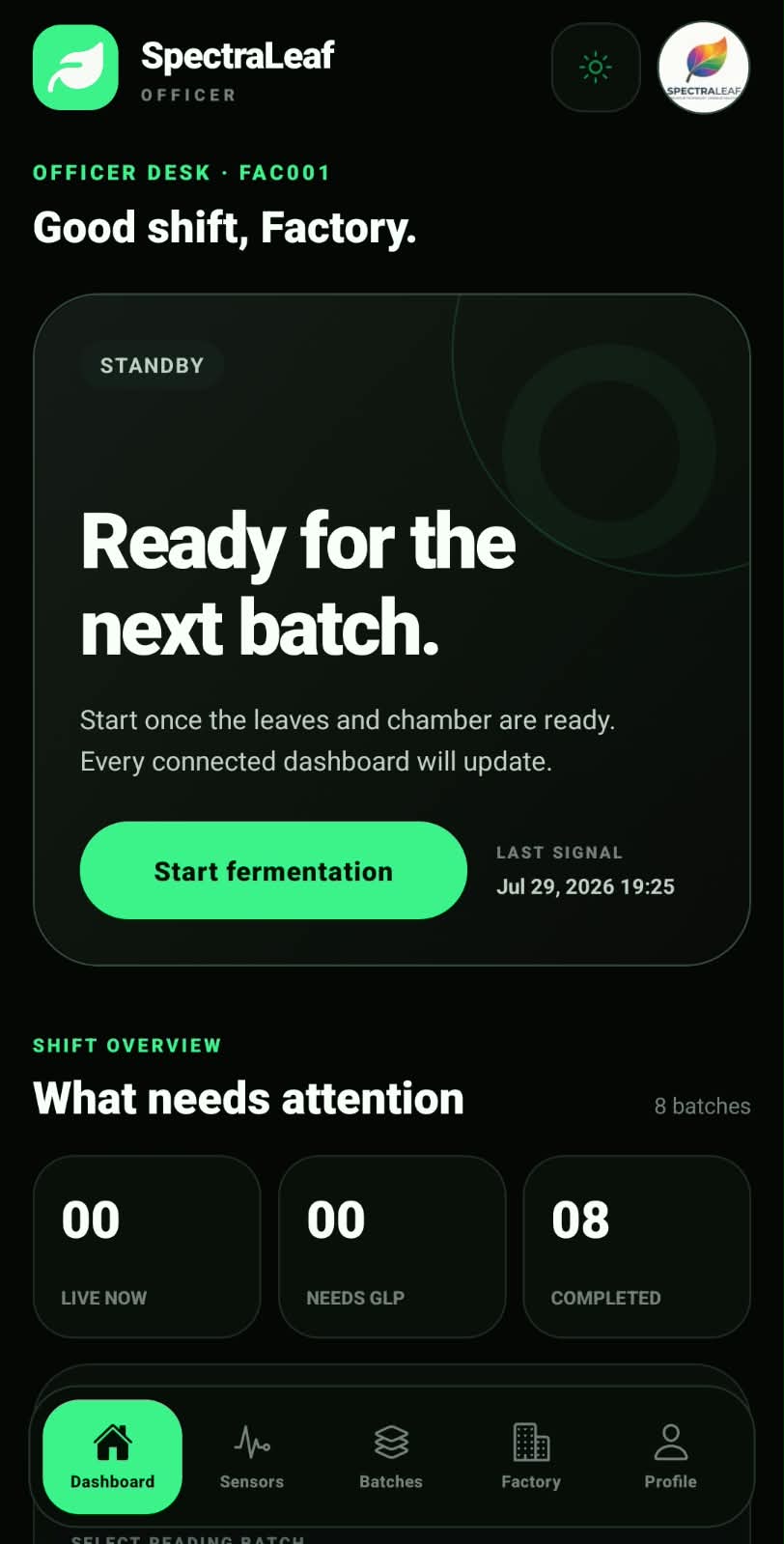
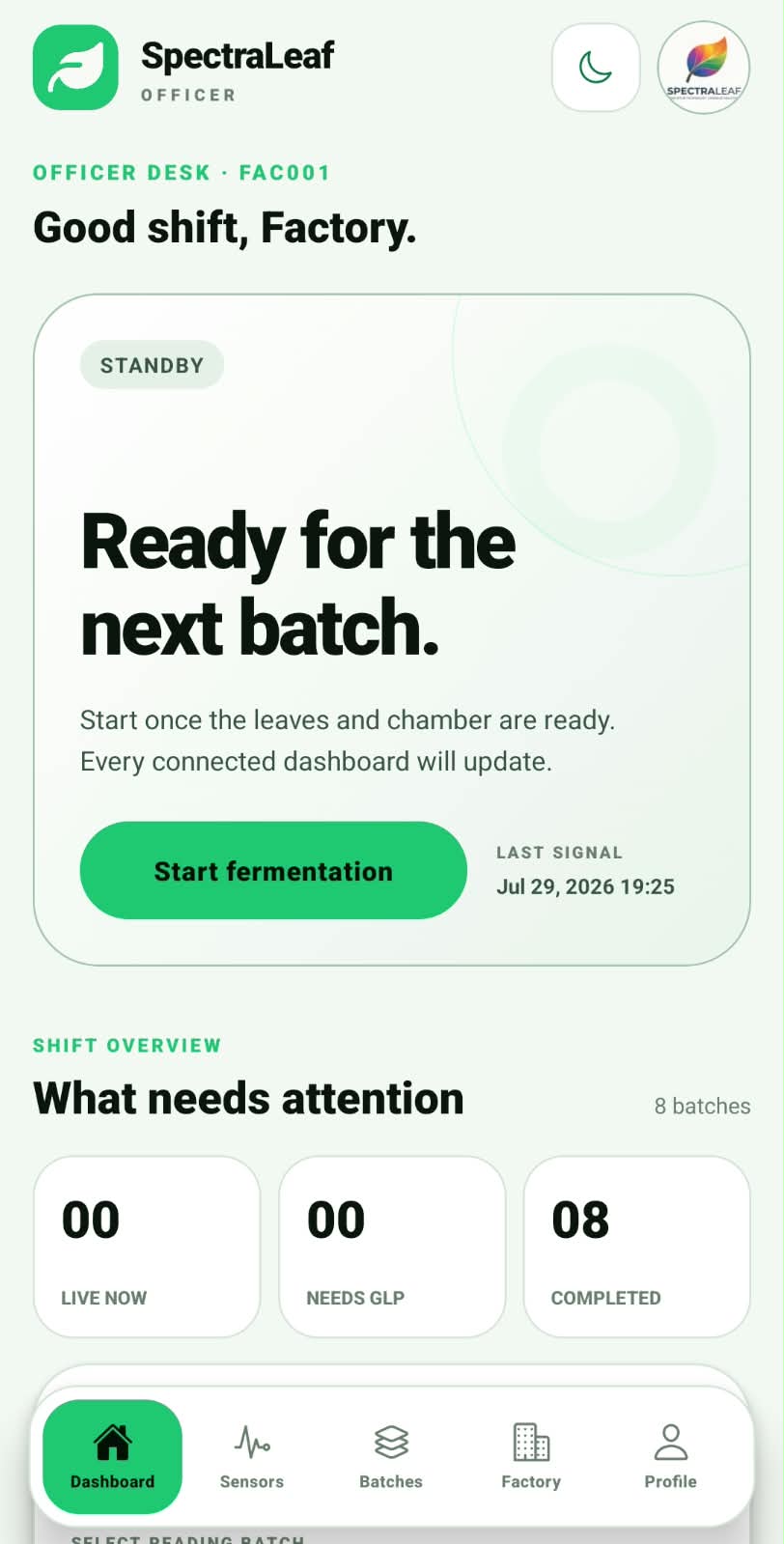
The mobile interface keeps active batches, latest readings and sensor trends visible away from the desktop command centre.
Statuses are editable project markers, not claimed pass rates. The test strategy spans delivery, security, cloud parity and edge resilience.
The following work areas define the validation scope for this layer.
A look behind the process: preparing samples, building the sensing system and validating it through hands-on laboratory work.
Every card below is a future objective, not a current deployment claim.
The student team develops the connected system with academic supervision and Crop Science guidance grounded in tea processing and quality evaluation.

Member of the multidisciplinary student team developing the Spectra Leaf fermentation system.

Member of the multidisciplinary student team developing the Spectra Leaf fermentation system.

Member of the multidisciplinary student team developing the Spectra Leaf fermentation system.

Member of the multidisciplinary student team developing the Spectra Leaf fermentation system.
Crop Science and Computer Engineering supervision connect tea-process knowledge with sensing, software, data validation and delivery.

Provides project supervision across software architecture, machine learning, data validation and platform delivery.

Provides systems-engineering guidance across embedded systems, industrial automation, technical validation and project delivery.

Advises the project on tea-plantation context, crop-science considerations and the interpretation of process observations alongside factory quality evaluation.
Spectra Leaf bridges traditional tea-manufacturing expertise with modern digital infrastructure. The current platform improves fermentation visibility through synchronized sensor telemetry and remote factory guidance. Every monitored batch also contributes to a structured quality dataset, the foundation for future automated detection of the fermentation sweet spot.
Explore the repository