
Merch4Change: An Integrated Social Commerce & Philanthropic Giving Platform
CO2060 — Software Systems Design Project (2YP)
Department of Computer Engineering · Faculty of Engineering · University of Peradeniya, Sri Lanka

Academic Information & Team
- Course Code: CO2060 — Software Systems Design Project
- Academic Institution: Department of Computer Engineering, University of Peradeniya
- Academic Batch: E23 (2025/2026)
- Team: Group 13 — Team Antigravity
- Live Deployment: merch4change.vercel.app
- Project Repository: github.com/cepdnaclk/e23-co2060-Merch4Change
Engineering Team
| Registration No | Student Name | Assigned Role | University Email |
|---|---|---|---|
| E/23/050 | G.C. Damsiluni | Frontend Developer & UI/UX Designer | e23050@eng.pdn.ac.lk |
| E/23/089 | M.A.S. Dulshara | Database Systems & Infrastructure Engineer | e23089@eng.pdn.ac.lk |
| E/23/343 | S.B.N.S. Samarawickrama | Backend Systems & API Architect | e23343@eng.pdn.ac.lk |
| E/23/347 | S.D.M.P. Sandanayake | Team Leader & Full-Stack Systems Engineer | e23347@eng.pdn.ac.lk |
Table of Contents
- Executive Summary & Problem Statement
- The Merch-to-Impact Closed-Loop Architecture
- Multi-Sided Stakeholder Roles
- Functional Capabilities & Subsystems
- System Process Workflows & Flowcharts
- System Architecture & Engineering Design
- Security Architecture & Concurrency Safeguards
- Quality Assurance & Verification Methodology
- Project Milestones & Strategic Roadmap
- References & Technical Resources
1. Executive Summary & Problem Statement
1.1 Problem Domain
Contemporary digital retail and philanthropic fundraising operate in distinct silos, leading to three systemic inefficiencies:
- Philanthropic Friction: While digital consumers exhibit strong demand for socially responsible consumption, conventional donation funnels are disconnected from day-to-day purchasing activities, producing high friction and drop-off rates.
- Asymmetric Information and Verification Deficits: Grassroots charitable institutions face profound credibility challenges. Lacking standardized verification channels, legitimate causes struggle to gain public trust and funding.
- Unrealized Corporate Social Responsibility: Independent brands and creators lack turn-key software infrastructure to demonstrate direct social impact within their existing sales funnels.
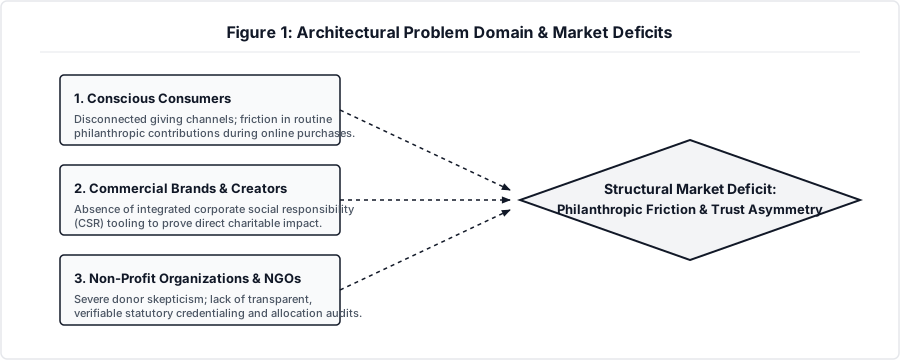 Figure 1: Systemic market deficits and structural friction separating consumer commerce from philanthropic funding.
1.2 Proposed Resolution
Merch4Change resolves this structural disconnect through a unified, multi-sided digital platform that connects ethical merchandise purchases directly with transparent philanthropic allocations via an in-app reward coin economy.
2. The Merch-to-Impact Closed-Loop Architecture
The platform operates on a closed-loop micro-philanthropic economy:
- Deterministic Coin Generation: For every verified merchandise purchase executed via Stripe, buyers automatically accrue Merch Coins calculated deterministically as $\lfloor \text{USD} / 10 \rfloor$ (1 coin per $10 spent).
- Targeted Cause Allocation: Consumers direct accrued coins toward specific verified charitable projects.
- Social Proof & Reputation Incentives: Total donations dynamically adjust the donor’s status across five tiers (Bronze $\rightarrow$ Silver $\rightarrow$ Gold $\rightarrow$ Platinum $\rightarrow$ Diamond), granting verified badges and public leaderboard standing.
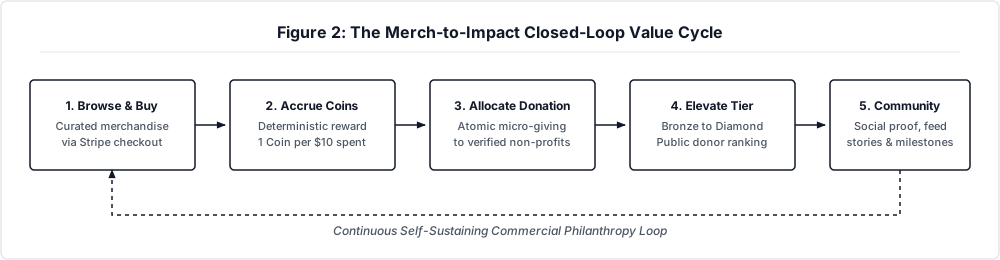 Figure 2: The closed-loop Merch-to-Impact value cycle converting retail transactions into verifiable social impact.
3. Multi-Sided Stakeholder Roles
The system is structured around four primary user personas with distinct operational scopes:
| Persona | Operational Scope & Permissions |
|---|---|
| Conscious Consumers | Discover and purchase curated merchandise, place real-time bids on limited charity auctions, earn Merch Coins, execute atomic cause donations, monitor project funding progress, and engage via community feeds and 24-hour stories. |
| Brands & Creators | Manage branded merchandise storefronts, publish product collections, upload cloud media assets, host timed charity drop auctions, and track verified impact metrics. |
| Charities & NGOs | Submit statutory registration documentation for administrative compliance audits, receive verified status badges, publish milestone-driven campaigns, receive atomic coin donations, and showcase physical headquarters on interactive geospatial maps. |
| Platform Administrators | Review pending non-profit compliance applications, inspect PDF documentation, grant or revoke verification status, audit system financial ledgers, and supervise content moderation. |
4. Functional Capabilities & Subsystems
Multi-Vendor Merchandise Marketplace
- Catalog Management: Unified discovery across independent vendors, creator apparel, and official organization merchandise.
- Multi-Attribute Search: Parametric query filters spanning categories, price intervals, seller verification tiers, and inventory states.
- PCI-Compliant Checkout: Integrated Stripe Checkout Sessions executing card authorization, tax computations, and automated order confirmation webhooks.
Timed Auction & Bidding Engine
- Dynamic Bidding Windows: Real-time countdown timers, automated minimum increment validation, and optimistic concurrency state updates.
- Participant Notifications: Automated event dispatch notifying outbid users and updating the active bidding ledger.
Closed-Loop Coin Economy & Crowdfunding
- Atomic Deductions: Transactional coin disbursements updating campaign balances under ACID guarantees.
- Milestone Visualization: Real-time progress indicators displaying accumulated funding relative to statutory project targets.
Non-Profit Governance & Geospatial Discovery
- Statutory Compliance Queue: Multi-step credential verification ensuring only vetted organizations can publish campaigns or accept funds.
- Geospatial Mapping: Interactive global map rendered using Leaflet and OpenStreetMap displaying verified charity head offices worldwide.
Social Community & Direct Messaging
- Algorithmic Activity Stream: Feed ranking posts according to follower affinity, interaction metrics, and time-decay functions.
- Ephemeral Stories: 24-hour expiring media stories and permanent profile highlight reels.
- Direct Messaging: One-to-one encrypted messaging threads with deterministic addressing and unread badge counters.
5. System Process Workflows & Flowcharts
5.1 End-to-End User Impact Journey
The complete operational flow from initial registration to verified philanthropic delivery:
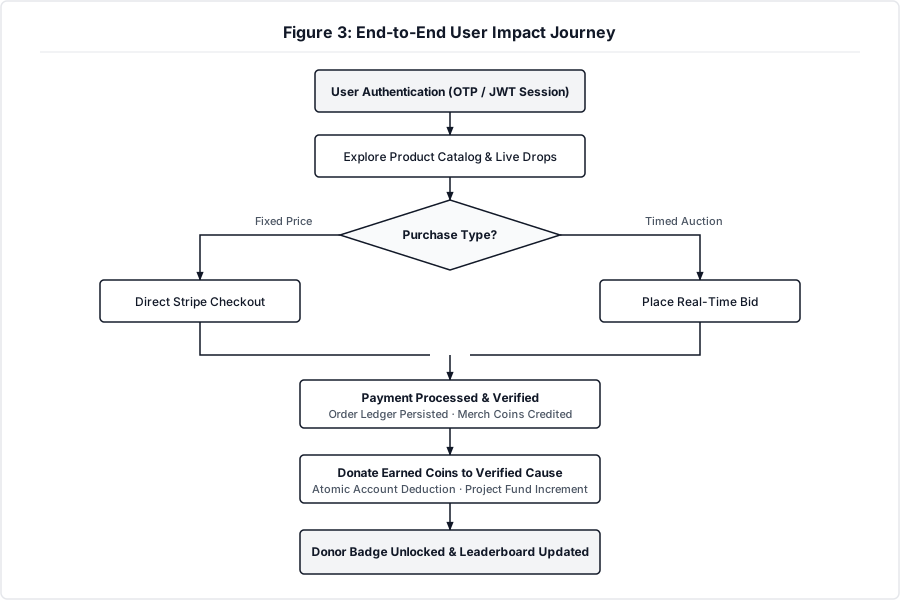 Figure 3: Sequence of operations from consumer onboarding to charitable impact execution.
5.2 Coin Accrual & Atomic Donation Engine
The reward and donation subsystem is built to ensure strict ledger integrity, preventing double-spending and race conditions:
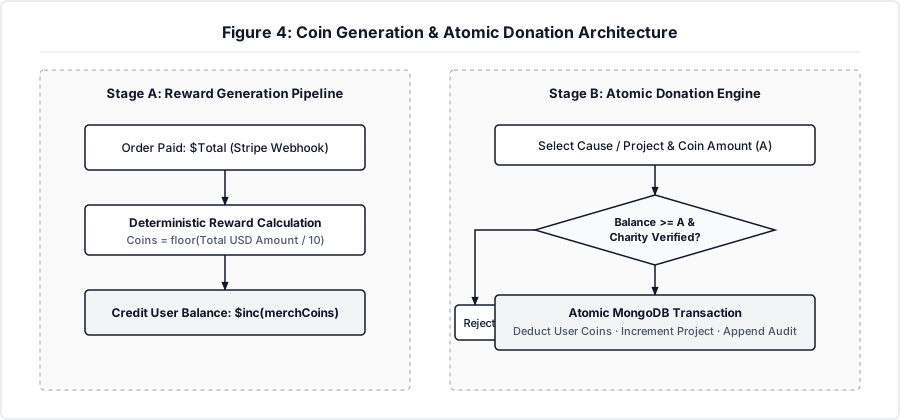 Figure 4: Algorithmic coin accrual calculations and atomic multi-document transaction pipeline.
5.3 Live Auction & Real-Time Bidding Mechanics
Ensures valid bid increments, active-window verification, and atomic high-bidder reassignment:
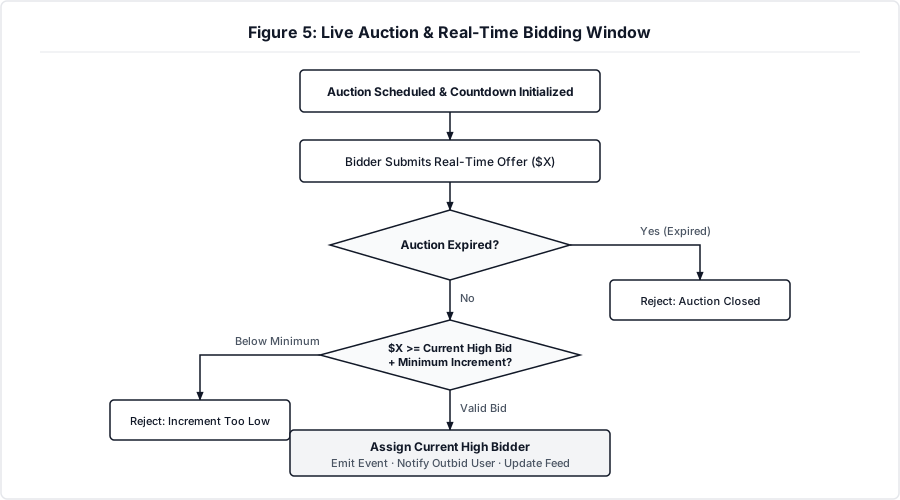 Figure 5: Auction scheduling, bid increment validation, and winner determination flow.
5.4 Non-Profit Credentialing & Regulatory Audit Pipeline
Rigorous multi-stage vetting process safeguarding donor contributions against unverified entities:
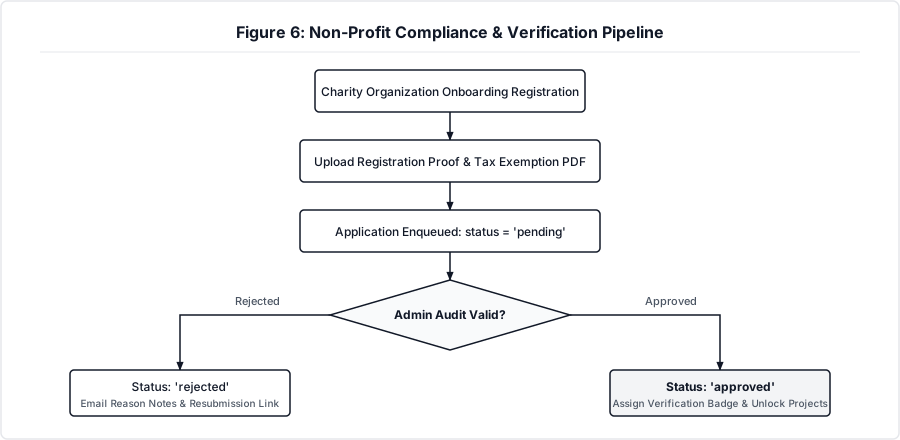 Figure 6: Administrative audit pipeline from certificate upload to verified directory indexing.
6. System Architecture & Engineering Design
6.1 High-Level Architecture
Merch4Change employs a modular three-tier client-server architecture:
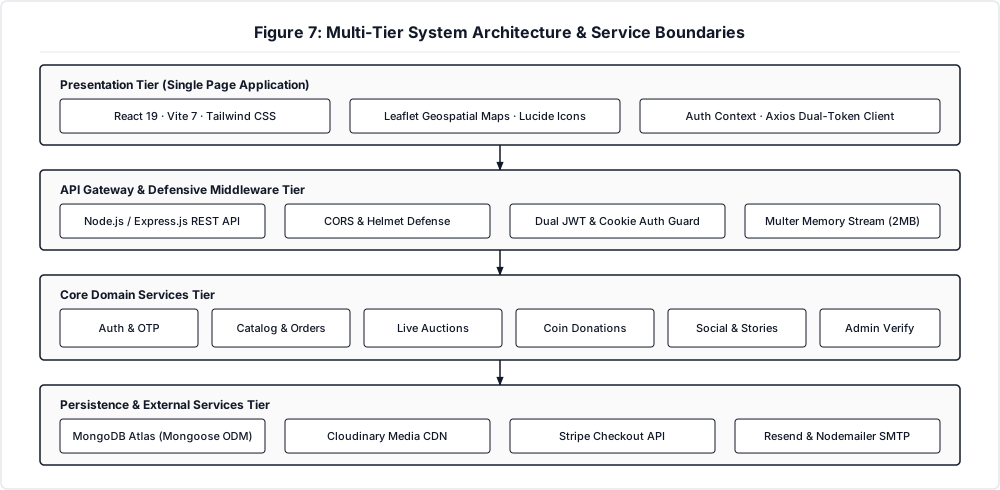 Figure 7: Multi-tier architectural boundaries spanning client SPA, API gateway, core domain services, and persistence.
6.2 Technology Matrix
| Subsystem | Selected Technologies | Technical Rationale |
|---|---|---|
| Presentation Tier | React 19, Vite 7, Tailwind CSS 3.4 | Modern React compiler optimizations, sub-second module reloads, and utility-first responsive layout structures. |
| Geospatial & Visuals | Leaflet, React-Leaflet, OpenStreetMap | High-performance raster map rendering for global NGO headquarters without proprietary API licensing constraints. |
| Backend Runtime | Node.js (>=18.0.0, ES Modules) | High-throughput asynchronous event loop well suited for concurrent e-commerce and real-time social workloads. |
| API Gateway Tier | Express.js 4 | Robust middleware composition, modular resource routers, and defensive HTTP security headers. |
| Database & ODM | MongoDB Atlas, Mongoose 8 | Flexible JSON document schemas accommodating polymorphic profile types, dynamic product attributes, and audit logs. |
| Session Security | Dual-Token JWT (Memory + HttpOnly Cookie) | In-memory ephemeral access tokens paired with rotated HttpOnly, SameSite=Lax refresh cookies. |
| Payment Ingress | Stripe Checkout API | Fully hosted, PCI-DSS compliant checkout sessions providing secure card processing and webhook notifications. |
| Media Pipeline | Cloudinary REST API, Multer (Memory) | In-memory buffering (strict 2MB ceiling) with streaming uploads to Cloudinary CDN, bypassing local disk storage. |
| Transactional Email | Resend API & Nodemailer (SMTP) | Multi-provider fallback delivery ensuring reliable OTP transmission during authentication and account recovery. |
6.3 NoSQL Document Model & Collection Architecture
The data tier is engineered natively on MongoDB Atlas utilizing Mongoose 8 ODM, leveraging a document-oriented NoSQL paradigm optimized for high-throughput reads, polymorphic user roles, and atomic ledger mutations:
- Denormalization vs. Referencing Strategy: High-frequency read paths employ embedded subdocuments (e.g.,
OrderItemsnapshots embedded directly inside theorderscollection) to guarantee immutable purchase records and eliminate costly runtime$lookupjoins. Shared entities (users,charities,projects) are linked via normalized MongoDBObjectIdreferences (ref). - Polymorphic Account Modeling: The
userscollection models diverse actor types (user,brand,charity,admin) alongside embedded authentication metadata, complemented by specialized profile documents (Charity,Brand,OrganizationProfile) linked through indexedownerUserIdreferences. - Compound Performance Indexing: Performance-critical query paths are hardened with targeted compound indexes:
{ status: 1, createdAt: -1 }ondonationsfor high-speed monthly and weekly leaderboard aggregations.{ role: 1, email: 1 }onusersfor rapid role-scoped authentication queries.{ userId: 1, status: 1 }onordersfor zero-latency customer purchase history lookups.
- Atomic Concurrency Controls: All coin balance modifications and campaign crowdfunding totals utilize conditional MongoDB atomic operators (
$inc,$set) executed with balance preconditions (e.g.,{ coinBalance: { $gte: donationAmount } }), delivering ACID-compliant ledger updates without the multi-table locking penalties of traditional relational databases.
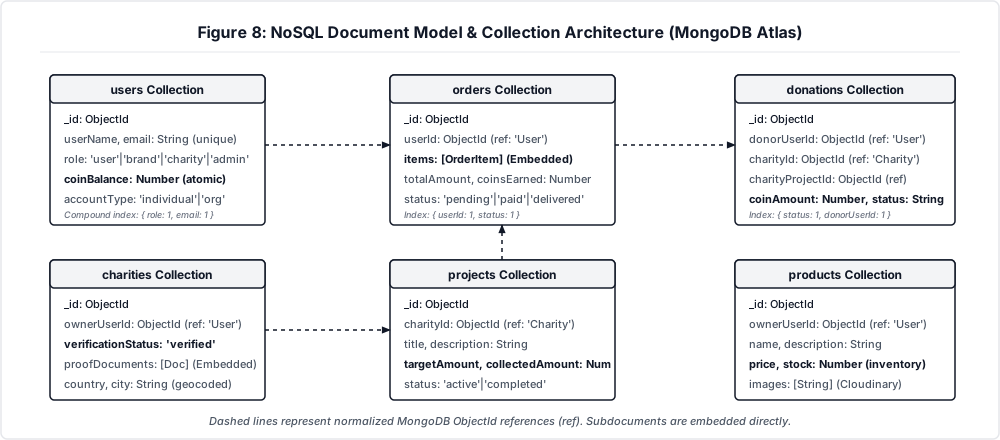 Figure 8: MongoDB NoSQL collection schemas, embedded document arrays, and normalized ObjectId references.
7. Security Architecture & Concurrency Safeguards
- Dual-Token Session Lifecycle: Ephemeral 15-minute access tokens remain strictly in memory to resist Cross-Site Scripting (XSS). 7-day refresh tokens are isolated inside
HttpOnly,Secure,SameSite=Laxcookies to prevent client-side exfiltration and CSRF exploitation. - Atomic Concurrency Controls: Coin deductions and auction bid adjustments utilize MongoDB atomic update operators (
$inc,$set) with precondition filters (e.g.,merchCoins: { $gte: donationAmount }), guaranteeing that coin balances cannot drop below zero under high concurrency. - Defensive Gateway Hardening: Enforces
helmetHTTP headers,express-rate-limitrate limiters on sensitive endpoints, strict payload validation, and CORS domain whitelisting. - In-Memory File Processing: Uploaded statutory certificates and product media are inspected in memory buffers and streamed directly to Cloudinary, ensuring uninspected files are never written to the server’s local file system.
8. Quality Assurance & Verification Methodology
System reliability is enforced through multi-tier automated test suites:
 Figure 9: Quality assurance pyramid spanning unit tests, endpoint integration, concurrency checks, and continuous integration.
- Automated Unit & Integration Tests: 205 automated test suites executed via the native Node.js test runner (
node --test), verifying route handlers, security middleware, and helper utilities. - Concurrency Verification: Stress-testing scripts simulating concurrent donation disbursements and rapid bidding sequences to verify data consistency.
- Continuous Integration (CI): Automated GitHub Actions workflows enforcing linting standards, build validity, and test suite execution on every pull request.
9. Project Milestones & Strategic Roadmap
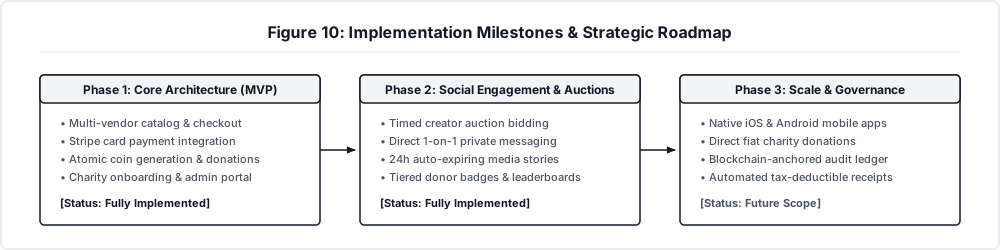 Figure 10: Phased project implementation roadmap from initial release to planned enterprise capabilities.
- Phase 1: Core Systems (Completed): Multi-vendor merchandise marketplace, Stripe card checkout, atomic coin donation engine, and charity compliance moderation portal.
- Phase 2: Social Engagement & Auctions (Completed): Live timed bidding windows, real-time messaging, ephemeral 24-hour stories, tiered donor badges, and community leaderboards.
- Phase 3: Scale & Enterprise Governance (Planned): Native mobile applications (iOS/Android), direct fiat charity contributions, blockchain-anchored audit ledgers, and automated tax deduction reporting.
10. References & Technical Resources
- Production Application: merch4change.vercel.app
- Project Source Code: github.com/cepdnaclk/e23-co2060-Merch4Change
- System Engineering Handbook: DEVELOPER_GUIDE.md
- Backend Verification Handbook: code/Backend/TESTING.md
- Department of Computer Engineering: ce.pdn.ac.lk
- Faculty of Engineering, University of Peradeniya: eng.pdn.ac.lk
Department of Computer Engineering · Faculty of Engineering · University of Peradeniya
CO2060 — Software Systems Design Project (2YP) · Academic Year 2025/2026